
The science of job sharing — what the research tells us about intergenerational partnerships and the future of the workforce
At The Jobshare Revolution, we hear inspiring job share stories every week. But in our latest episode of Jobshare Stories, we did something a little different — we spoke to someone who has studied job sharing from the outside in. Dr Dawn H, Nicholson is a business psychologist and honorary academic whose career spans Arthur Andersen, Morgan Stanley, PricewaterhouseCoopers and the University of Kent. She is also one of the few academics in the UK to have turned a research lens directly onto job sharing — and what she found is both fascinating and important.
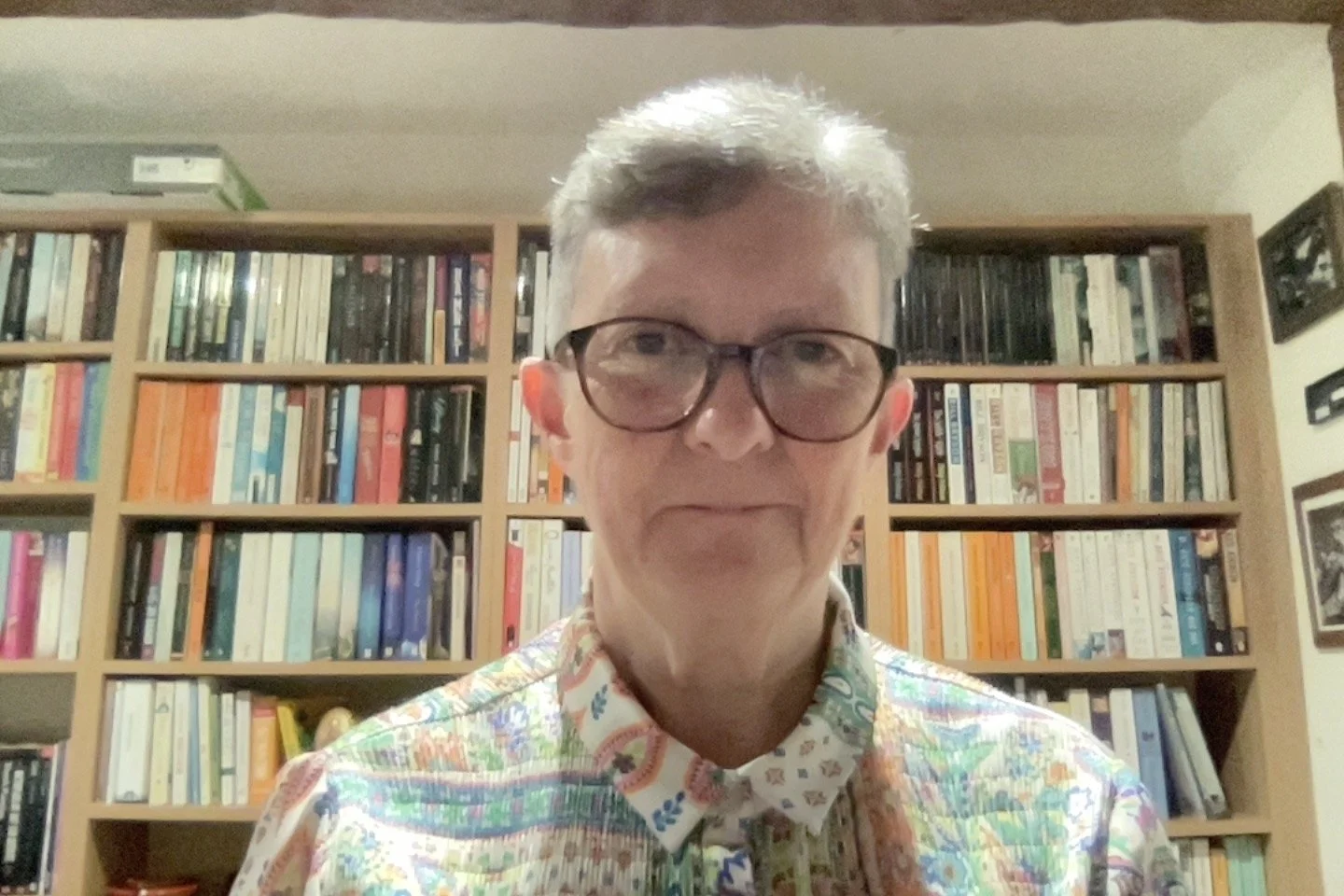
Dr Dawn H Nicholson - Honorary Academic & Business Psychologist
A career spanning two worlds
Dawn's path to job sharing research is itself an unusual one. After years in senior Consulting and HR leadership roles — including 16 years at Morgan Stanley, where she was Managing Director, Deputy Head of HR for Europe, the Middle East and Africa and then a Partner at PWC - she made a deliberate career pivot at the age of 50, returning to academia to study psychology at the University of Kent. She completed her PhD in the psychology of decision-making and has since combined teaching, research and her role as Vice Chair of the Association for Business Psychology with consultancy and advisory work.
It's a career that gives her a uniquely rounded perspective. She has seen flexible working from the inside of major global organisations. She has studied the psychology of how people make decisions about work. And she has supervised research that looks directly at why job sharing is still so underutilised — and what it would take to change that.
The great resignation and the genesis of the research
Dawn's main piece of job sharing research grew out of a very specific moment in time. In 2022, emerging from the COVID pandemic, the UK was grappling with what had been labelled the "great resignation" — a significant wave of older, more experienced workers choosing to exit the workforce entirely, either through early retirement, ill health, or a simple reassessment of priorities.
At the same time, a new generation of young workers was entering a workplace they had never actually experienced in person. The pandemic had robbed many of those formative early career moments — the informal learning, the mentoring, the gradual absorption of professional norms that comes from working alongside experienced colleagues. Many were entering desk-based roles having never sat next to a colleague.
Dawn and her research partner — then master's student, Gabriela González Otero, now Head of People Operations at the Spanish firm AbBaltis — saw these two challenges as two sides of the same coin. Their question: could intergenerational job sharing be the solution to both?
What the research found: the older worker
The findings were striking — and in some cases, surprising.
For older workers, the research confirmed what many of us might expect: as people move through their careers, their relationship with work changes. The drive for power and achievement that characterises early career tends to give way to something different — a desire for purpose, for contribution, for meaning.
As Dawn puts it: "The Older workers in our study expressed a much greater sense of benevolence, these communal and pro-social values and a sense that individuals at that side of their career were interested more in learning for learning's sake, and in sharing their knowledge."
When asked directly whether they would consider a job share with a younger, less experienced colleague to help mentor them and transfer knowledge, the response from both men and women in the survey was strongly positive. Interestingly, the response was even more positive from men than women — with a clear sense that intergenerational job sharing could actively enhance their sense of purpose at work.
This matters. The loss of experienced, senior talent from UK organisations is not just a skills gap — it is a purpose gap. Organisations that create structured pathways for that talent to stay engaged, contribute and transfer knowledge, will be significantly stronger for it.
What the research found: the younger worker
The picture from younger respondents was equally revealing — though with an additional layer of complexity.
Many of the 18 to 24 year olds surveyed were open and positive about the idea of being paired with a more experienced colleague in a job share arrangement. But that positivity came alongside something else: a significant undercurrent of self-doubt.
As Dawn explains:
"A lot of those younger workers — they do lack confidence in the workplace. They don't know how the workplace works. Some indicated very strongly that they felt a lack of confidence, doubts about their own ability."
And yet, when the idea of intergenerational job sharing was presented to them, many saw it as exactly the kind of structured support they needed. It wasn't just about learning skills — it was about having someone alongside them who could help them navigate the workplace itself, build their confidence, and ease the transition into professional life in a way that remote or hybrid working simply doesn't provide.
There was one honest concern: the fear that the older partner might judge them, might see their inexperience as inadequacy. But on balance, the younger respondents felt that the pairing would be a positive experience — both for their professional development and their personal confidence.
The "successor share" model
Our conversation with Dawn highlights one of the key emerging themes we’re seeing in jobsharing - the "successor share" - deliberately structured, evolving job share in which an older, more experienced employee gradually reduces their hours whilst a younger colleague steps up, absorbing knowledge, building relationships and growing into the role in real time.
Dawn describes how this might work in practice: "You could easily have the younger employee working full time, but two of those five days being the job share piece, and then gradually that could shift. Perhaps the older person decides, do you know what, I was doing five days, now I only want to do four, now I only want to do three. But the younger person is there to step up and fill the gap because they've gained the expertise and they've gained the confidence."
This is not just a flexible working arrangement. It is a structured approach to succession planning — one that removes the cliff edge of retirement, retains institutional knowledge, reduces training and L&D costs, and ensures continuity of leadership in a way that a sudden handover simply cannot replicate.
What needs to change — societally and structurally
When we asked Dawn what would need to happen at a societal level for job sharing to become more widely adopted, her answer was both simple and profound: we need to talk about it more.
"There are great examples out there, but it's not front of mind enough. Where are the success stories? Where are the great examples where this has really worked?"
But beyond visibility, Dawn points to something deeper — the need for organisations and society as a whole to recognise that work is not a fixed, unchanging thing. People's needs shift as they move through life. Caring responsibilities come and go. Health changes. Priorities evolve. And as people work longer than ever before, the idea that one rigid model of work can serve someone from their early twenties to their late sixties is simply no longer tenable.
"We need to have these conversations now to really, as a society, be prepared for the changes that people are going to be faced with as they work in workplaces for longer."
Job sharing, at its best, is not just a flexible working arrangement. It is a structural response to the complexity of human lives — and an acknowledgement that the organisations best placed to thrive are those that are genuinely responsive to that complexity.
Want to hear more?
To hear our conversation with Dawn - including her insights on the psychology of decision-making in the workplace, the role of trust in enabling job sharing, and the outputs of her research - search for Jobshare Stories wherever you get your podcasts.
While you’re there, listen to the many other inspiring jobshare stories we have collated over the past few years – real evidence that jobsharing can work across all roles.
If you want to find out more about how job sharing could support your organisation's workforce planning and succession strategy, get in touch at hello@TheJobshareRevolution.co.uk
#Jobshare #JobshareStories #Podcast #IntergenerationalJobShare #BusinessPsychology #TalentRetention #SuccessorShare #FlexibleWorking #FutureOfWork #JobshareRevolution
